ANNOUNCING ECHELON 2026.1
Stone Ridge Technology and Eni are pleased to announce the release of ECHELON 2026.1
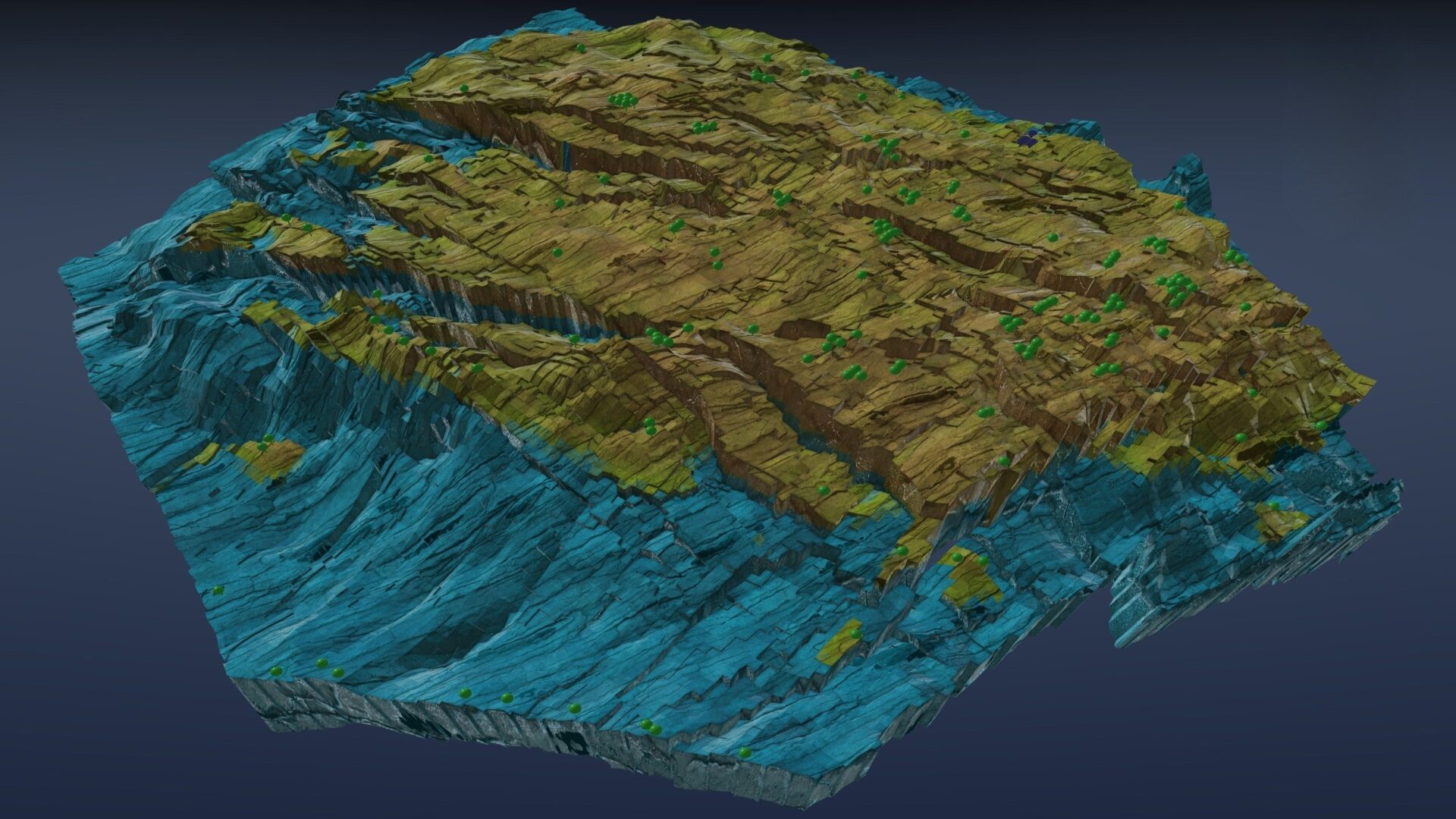
Stone Ridge Technology and Eni are pleased to announce the release of ECHELON 2026.1
Posted in: ECHELON Software
New features in this release, developed by the ECHELON Consortium Team in Milan and North America, include:
Wellbore storage to be used in coupled KAPPA-Workstation ECHELON Workflows
Now ECHELON can model wellbore storage effects in both black-oil and compositional models, to better represent surface responses during transient tests, choke movements and rate changes. This feature is currently for ECHELON in conjunction with Rubis as KAPPA-Workstation numerical engine.
Additional viscosity enhancements
Support for additional non-standard viscosity correlations for compositional fluids, reducing the tuning effort required to ensure the simulated reservoir fluids match observations.
Time-dependent user-defined quantities
Now it is easier to set up production forecast constraints using simplified groups and well commands with a common spreadsheet format input via the CSV_SCHED keyword in the SCHEDULE section. The records read from the .csv file include the simulation date at which the data change, described by the record should occur. This capability can be used to override UDQ values, essentially yielding time-dependent UDQs.
Time-dependent non-neighbor connections
Non-neighbor connection transmissibilities can now be modified during a simulation, allowing them to vary with time; this offers flexibility in history matching and in forecasting sensitivities.
Network coupling enhancements
The pre-balancing step has been extended in coupled ECHELON-FNS models to allow multiple iterations, to ensure better consistency between the flow out of the reservoir and the flow within the network in cases where flows from multiple wells with significantly different flowing potentials, yet under the same group control, are merged together.
Capillary pressure damping
For uncommon cases in which rapid changes in capillary pressure between timesteps lead to non-linear Newton solver convergence problems, ECHELON 2026.1 introduces several damping models to slow the rate of capillary-pressure change, along with an option to hold capillary pressures fixed at their initial values.
Expanded GPU architecture support
Added support for the AMD Instinct MI300X datacenter GPU, in addition to the existing support for all current NVIDIA datacenter architectures and a broad range of desktop GPU variants from both vendors.
Other features and improvements
- Fuel and sales gas streams originating from separator stages are now labeled, and their selection, for a given use, can follow a user-specified priority order.
- Analytical aquifers now support thermal energy transport.
- Enhanced black-oil thermal simulation fluid model with temperature dependence of formation volume factors.
Please contact Stone Ridge Technology to obtain this 2026.1 release of ECHELON for use in your evaluations, or for additional information on ECHELON software’s capabilities.

Steve Crockett
Steve Crockett is Software Development Manager at Stone Ridge Technology